
Marjoram
Botanical name
Origanum majorana L.
Family
Lamiaceae
Common name
Sweet Marjoram, Garden Marjoram, Knotted Marjoram
Information about the plant
Marjoram is native to the eastern Mediterranean region and was already a popular culinary herb among the ancient Egyptians, Greeks, and Romans. Today, it is cultivated mainly in the Mediterranean region and the temperate zones of the Northern Hemisphere, and remains a very important spice.
The genus name Origanum derives from the Greek “oraos” (= mountain) and “ganos” (= jewelry, ornament). The Origanum species were considered ‘mountain ornaments’. The species epithet majorana was originally the genus name of the plant when it was still called Majorana hortensis Moench. This name is now considered a synonym of Origanum majorana L., the currently accepted name. Majorana was an Arabic plant name that later served as a species name and was adopted into the German name ‘Majoran’.
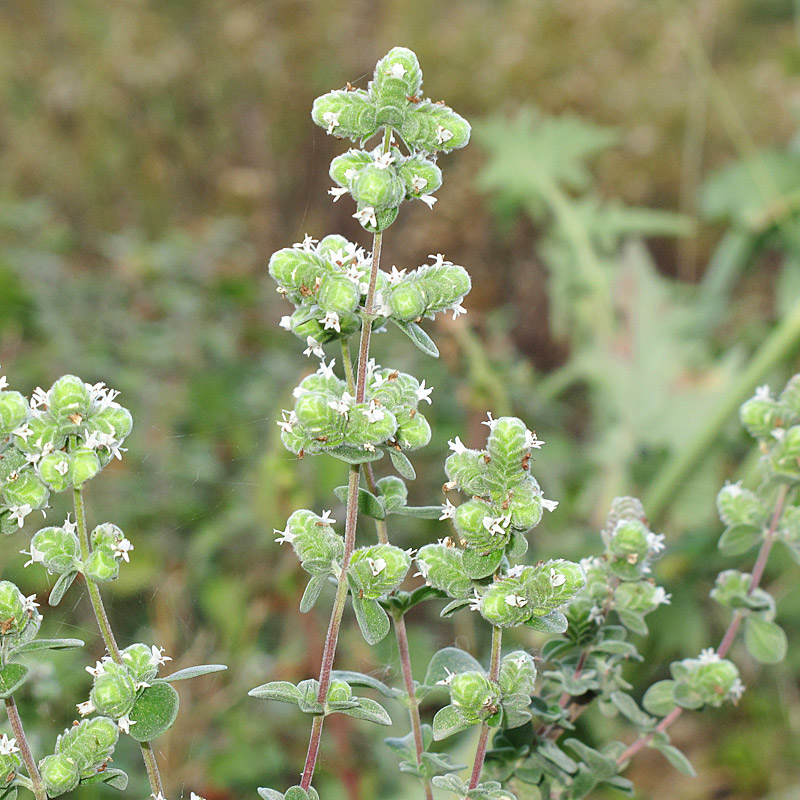
Marjoram grows up to 50 cm tall, is branched, and mostly hairy. The short-stalked leaves are cross-opposite on the square stem. The flowers are pink or white and are arranged terminally in head-like inflorescences. The calyx is single-lipped with deep lateral indentation, and the corolla is a labiate flower with a two-lobed upper lip and a three-lobed lower lip. Marjoram has a characteristically spicy aroma due to the essential oil contained in the herb. It is stored in glandular scales on the leaf surface and released when these glands are damaged when rubbed.
Medicinally used parts of plants (herbal drug)
The dried herb (marjoram herb - Origani majoranae herba), with its spicy odor from the essential oil it contains, is used.
The commercially available drug is sourced from Mediterranean countries.
Constituents of the herbal drug
Marjoram herb contains essential oil (marjoram oil) with terpinen-4-ol, cis-sabinene hydrate, and γ-terpinene as the main components. Additionally, it contains flavonoids, phenylpropane glycosides, lamiaceous tannins, and triterpene acids.
Quality of the drug
There is no pharmacopeial quality specification available for marjoram herb (Origani majoranae herba).
Medical applications
Recognised medical use
The HMPC has classified marjoram as a traditional herbal medicinal product (see ‘Traditional use’).
ESCOP: Marjoram has not been evaluated.
Traditional use
Marjoram has been classified by the HMPC as a traditional herbal medicinal product (Article 16a of Directive 2001/83/EC). Based upon long-standing use, marjoram herb can be used internally to treat mild digestive complaints such as bloating and flatulence, and externally for inflammation of the nasal passages.
Herbal drug preparations in finished dosage forms
- Cut marjoram herb for tea preparation
- Alcoholic extract (DER 1:5) incorporated into white petroleum jelly as an ointment
Dosage
Finished medicinal product: See patient information leaflet.
Tea: Drink one cup of marjoram tea one to two times a day, half an hour before eating. Daily dose: 2 to 8 g of the drug.
For the treatment of inflammation in the nasal passages of children and adults, apply the ointment two to four times a day.
Preparation of a tea
Add 2 to 4 g of finely chopped marjoram herb to 150 ml of hot water (do not boil!), allow to stand for 5 to 10 minutes, and strain.
Notes
When applying marjoram ointment to the nasal passages, ensure that no ointment enters the inner nasal cavity. Marjoram nasal ointment should not be applied to children under one year of age.
No safety studies have been conducted on the use of marjoram herb during pregnancy or lactation. Internal use in children and adolescents under the age of 18 is not recommended due to a lack of evidence.
Side effects
None known.
Interactions
None known.