

Coltsfoot

Botanical name
Tussilago farfara L.
Family
Asteraceae
Common name
Colt’s-foot, Foalfoot, Horse Foot, Coughwort, Bull Foot
Information about the plant
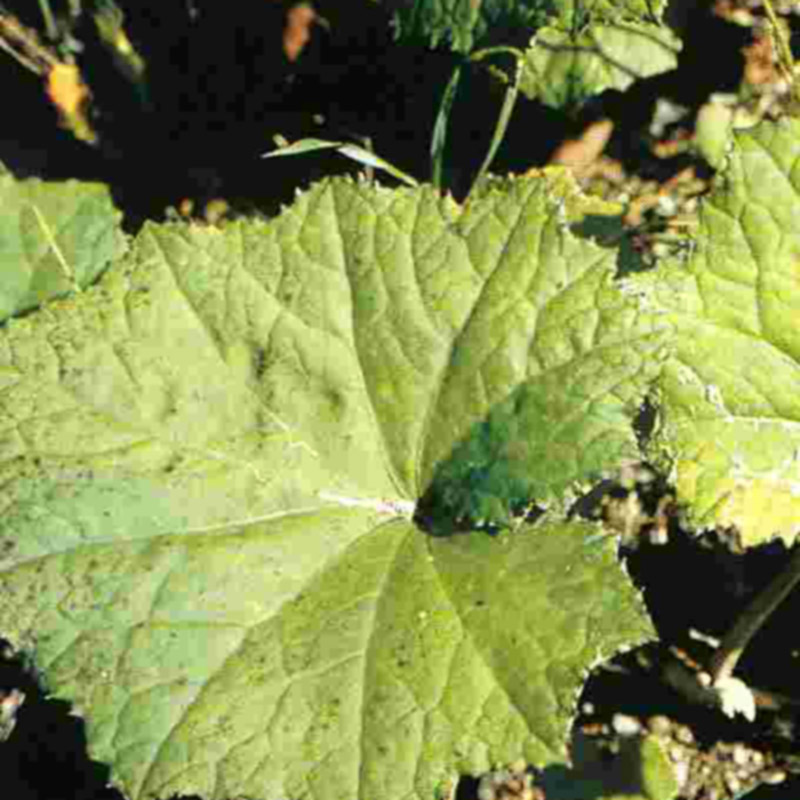
Photo: aus Hänsel/Hölzl
Coltsfoot is a Eurasian plant widespread throughout Europe. To the north, its range extends as far as Iceland, northern Scandinavia, and northern Russia; to the south, as far as Sicily and North Africa. On the Iberian Peninsula, however, coltsfoot is only found in the north. In the Peloponnese, Anatolia (Asia Minor), and the Middle East, it grows only sporadically; eastwards, its distribution area otherwise extends to central Siberia and Central Asia. It has also been introduced to North America and Iceland.
Coltsfoot tends to grow in ruderal habitats, which are areas heavily affected by human activity, such as construction sites, quarries, ditches, roadsides, fields, and fallow land. Its early flowering period (February to April) is a good adaptation to short growing seasons and cold winters.
The genus name Tussilago is derived from the Latin ‘tussis’ (= cough) and ‘agere’ (= to lead away, drive away), referring to coltsfoot’s traditional use in folk medicine. The species epithet farfara is etymologically unclear, but is likely associated with the grey felt-like hairs on the underside of the leaves, derived from Latin 'far' (= flour) and 'ferre' (= to carry). In Latin, the drug obtained from the plant was therefore called ‘folia farferi’. The German name ‘Huflattich’ refers to the hoof-like shape of the leaves, while the suffix ‘lattich’ is often used for plants with large leaves.
In early spring, 3 to 15 cm high, white-felt stems with reddish scale leaves sprout from underground rhizomes. At the end of each stem is a bright yellow flower head, approximately 2.5 cm in diameter, with numerous narrow female ray florets and 30 to 40 bell-shaped male tubular florets in the center. The flower is surrounded by a single row of narrow, red-tinted bracts. The fruits are brown, 3 to 11 mm long, with a multi-rowed pappus of shiny white hairs as a flight organ. The leaves emerge only after flowering; they are basal, rounded-cordate, up to 25 cm in diameter, coarsely toothed, and covered with white felt-like hairs on the underside. They can easily be confused with the leaves of butterbur (Petasites).
Medicinally used parts of plants (herbal drug)
The dried leaves (Farfarae folium) are used.
Constituents of the herbal drug
Coltsfoot leaves contain polysaccharides (mucilage polysaccharides and inulin), triterpenes, sterols, tannins, and bitter substances. They also contain hepatotoxic pyrrolizidine alkaloids (PA), which is why the drug has largely lost its significance as a medicinal product. Today, ‘low-PA’ coltsfoot plants are used for drug production.
Quality of the drug
No pharmacopoeia quality description is available for coltsfoot leaves (Farfarae folium). The drug was previously listed in the German Pharmacopoeia (up to DAB 10), but due to its pyrrolizidine alkaloid content and declining use, it was not included in the following edition of the pharmacopoeia.
Medical applications
Recognised medical use
Coltsfoot leaves were neither evaluated by the HMPC or ESCOP.
Traditional use
Coltsfoot has not been classified as a traditional medicinal product (Article 16a of Directive 2001/83/E).
Herbal drug preparations in finished dosage forms
- Chopped coltsfoot leaves for tea preparation
- Fresh plant juice
Dosage
Finished medicinal product: See patient information leaflet.
Tea: Drink one cup of hot coltsfoot tea in small sips, three times a day.
Preparation of a tea
Pour approximately 150 mL of boiling water over 1.5 to 2.5 g of finely chopped coltsfoot leaves (tested for pyrrolizidine alkaloid content or PA-free) and strain after 10 minutes.
Notes
According to the European Medicines Agency (EMA) recommendation on limit values, oral herbal medicinal products may contain a maximum of 0.007 µg of pyrrolizidine alkaloids (PA) per kilogram of bodyweight in the daily dose for adults (correspondingly less for children) and may be taken for a maximum of 14 days.
Due to the content of toxic pyrrolizidine alkaloids, the use of coltsfoot leaves during pregnancy and lactation is not recommended, nor is their use in children and adolescents under 18 years of age.
In case of allergies to Asteraceae, coltsfoot should not be taken (cross-allergy possible).
Side effects
Allergic reactions are possible. See also ‘Notes’.
Interactions
None known.