

Cinchona tree
Botanical name
Cinchona pubescens Vahl (Syn.: C. succirubra Pav.)
Family
Rubiaceae
Common name
Red bark, Red cinchona, Quinine tree, Quina, Peruvian bark, Jesuit’s bark
Information about the plant
The red cinchona tree is native to the forests of Central America and tropical South America (Venezuela, Ecuador), where it grows in the mountain forests of the Andes. It has long been cultivated in tropical regions worldwide, primarily in India, Java, and China.
The genus name Cinchona originally comes from the Spanish word “quinaquina” (= bark of the bark); however, Linnaeus reinterpreted the name after the wife of the Count of Chinchón (Viceroy of Peru). She was cured of intermittent fever with the bark of this tree (English name: fever bark tree!). Upon her return to Spain in 1638, the Countess contributed significantly to raising awareness of the effects of this bark. In folk etymology, this medication was then transformed into “cinchona bark”; the main active ingredient, a very bitter-tasting alkaloid, was then given the name “quinine.”
The antipyretic effect of the bark was already known to the indigenous peoples of the Andes, which is why the bark has always been used to treat malaria. It became particularly important during the colonial era because the occupying forces and many tropical farmers were exposed to the tropical climate and the associated diseases. In 1827, quinine was isolated from the bark for the first time and was later used as a pure substance to treat malaria. Today, the bitter compounds in the bark are also used as additives in liqueurs and tonic waters (tonic water, bitter lemon).
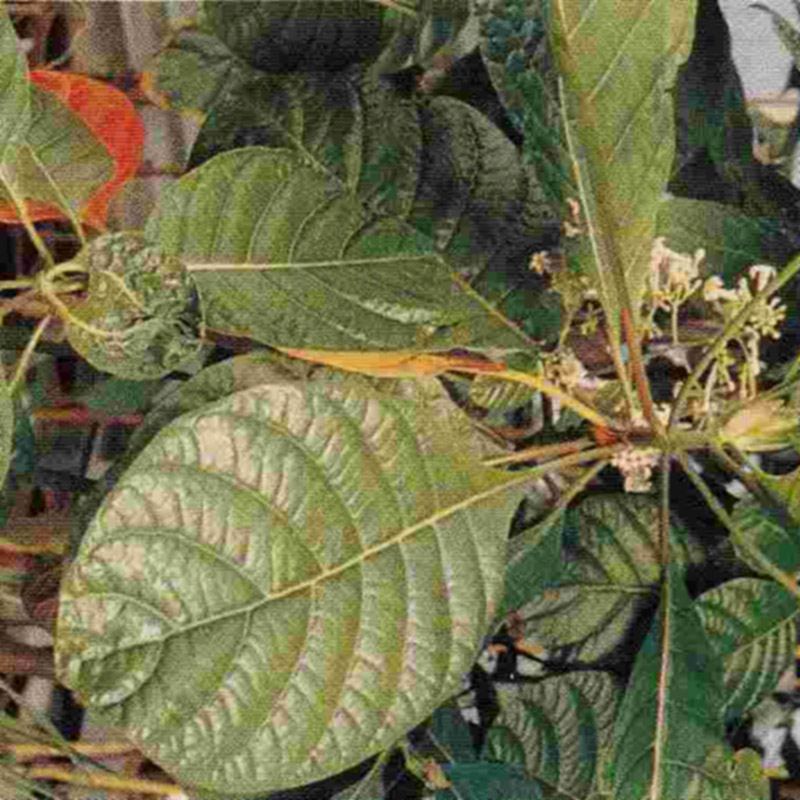
The cinchona tree grows to a height of 8 to 15 meters. Its large, ovate leaves are entire and grow opposite each other on the branches. The flowers are arranged in terminal and axillary panicles. They consist of a light pink, silky-haired corolla tube with 5 protruding, hairy lobes (pubescent = hairy, downy), surrounded by a hairy calyx. The fruit is a capsule with winged seeds.
Medicinally used parts of plants (herbal drug)
The dried bark of the trunk, branches, and twigs (cinchona bark – Chinae cortex) is used.
Constituents of the herbal drug
Cinchona bark contains various quinoline alkaloids; the main alkaloid is quinine, and the minor alkaloids are quinidine, cinchonine, and cinchonidine. It also contains condensed tannins, tannin precursors, and bitter compounds of the triterpene type (quinovins).
Quality of the drug
The quality of the following drugs and drug preparations is specified in the European Pharmacopoeia (Ph. Eur.):
- Cinchona bark (Cinchonae cortex)
- Standardized cinchona bark fluid extract (Cinchonae extractum fluidum normatum)
According to the pharmacopoeia, the bark of Cinchona calisaya Wedd. and C. ledgeriana Moens ex Trimen, or the bark of their varieties and hybrids, may also be used.
The quality of “compound cinchona tincture (Cinchonae tinctura composita)” is specified in the German Pharmacopoeia (DAB). The quality of “standardized cinchona bark tincture (Cinchonae corticis tinctura normata)” is specified in the German Drug Codex (DAC).
Medical applications
Recognised medical use
Cinchona bark has not been evaluated by the HMPC or ESCOP.
In the past, cinchona bark was used to treat fever (fever bark tree!), but this is no longer common practice due to the development of more effective antipyretic agents. In the phytotherapeutic context, cinchona bark is now used as a bitter substance to treat loss of appetite and digestive problems.
Traditional use
Cinchona bark has not yet been classified as a traditional herbal medicinal product (Article 16a of Directive 2001/83/EC).
Herbal drug preparations in finished dosage forms
- Cut cinchona bark for tea preparation
- Tincture in drops
- Cinchona homeopathic mother tincture in drops
Dosage
Finished medicinal product: See patient information leaflet.
Tea: Drink 1 cup of cinchona bark tea 2 to 3 times daily, 30 minutes before meals. Drink 1 cup after meals for digestive problems.
Preparation of a tea
Pour 150 mL of boiling water over 1 g of finely chopped cinchona bark and strain after 10 minutes.
Notes
No studies have been published on the safety of cinchona bark during pregnancy and lactation. Use in children under 12 years of age is not recommended due to a lack of evidence.
Cinchona bark preparations should not be taken in cases of gastric or duodenal ulcers.
Concomitant use of anticoagulants may increase the effect of these substances.
References
Herbal drug monographs
None available.
Further literature
Commentary on the European Pharmacopoeia (cinchona bark, No. 0174, cinchona bark fluid extract, No. 1818). Commentary on the German Pharmacopoeia (cinchona tincture)