

Grapevine
Botanical name
Vitis vinifera L.
Family
Vitaceae
Common name
Grape, European grape, Wine grape, Common grapevine
Information about the plant
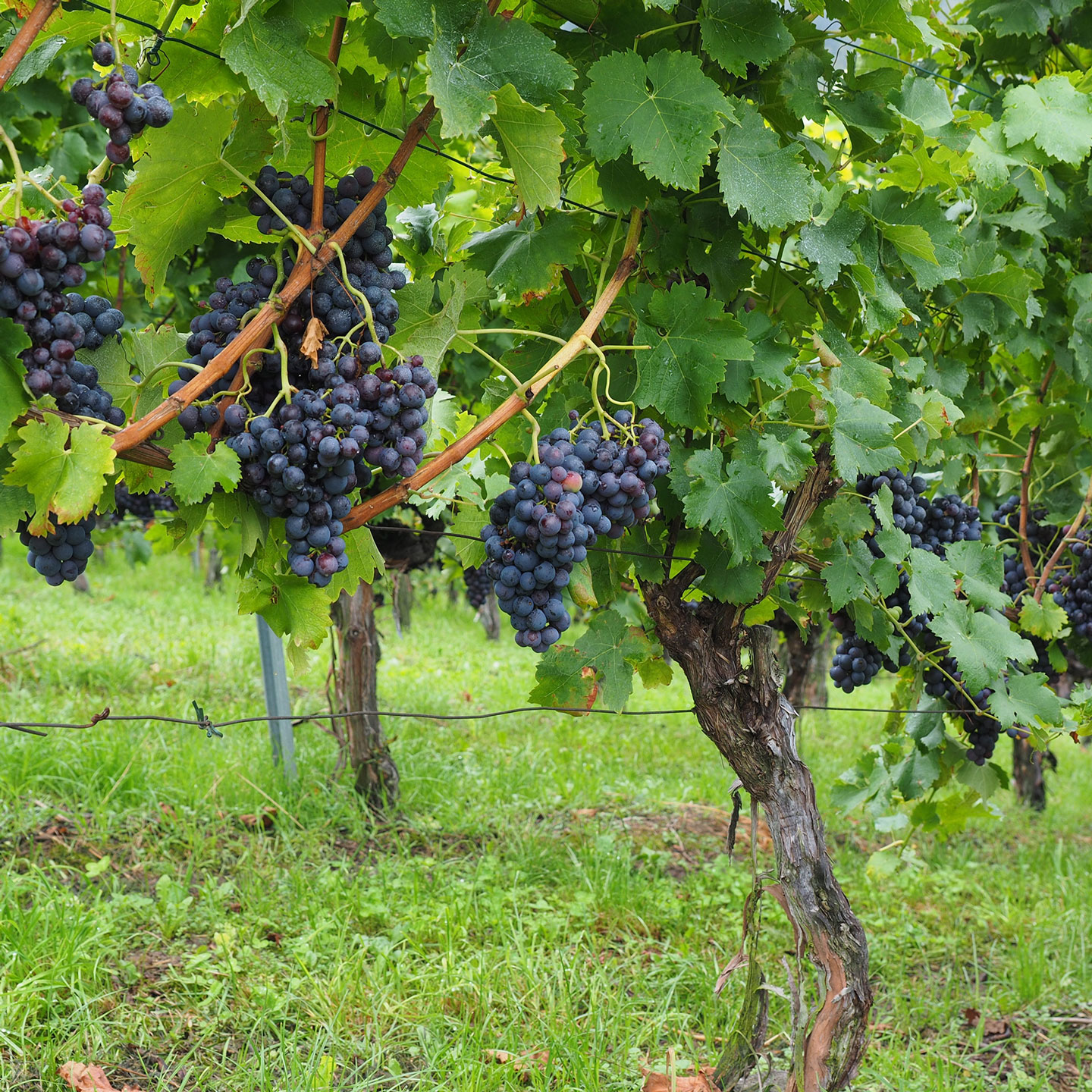
The grapevine, Vitis vinifera, is a woody plant that climbs using branched tendrils. The subspecies sylvestris (Latin ‘sylvester’ = forest, wild-growing) grows wild in the floodplain forests of the Upper Rhine Plain, in the Danube River Basin, in the Mediterranean region, Western Asia, and the South Caucasus. The original home of the wild grapevines is the Caucasus. The numerous varieties of the subspecies vinifera are cultivated worldwide and produce wine, as reflected in the species epithet vinifera (Latin ‘vinum’ = wine; ‘ferre’ = to bear).
The leaves of the grapevine are very characteristically cordate, with 5 to 7 lobes and irregularly serrated margins. The small, yellow-green, fragrant, five-petaled flowers are densely clustered in compound panicles, commonly known as ‘grapes’. In the wild form, the fruits are small, elongated, dark blue, and sour. The fruits of cultivated forms, the grapes, are significantly larger and either greenish-yellow (used to make white wine) or red to blue-black (used to make red wine and rosé); each contains two seeds. The red grapevine, Vitis vinifera var. tinctoria, is used medicinally. It is a cultivated variety characterized by red leaves and red berries with red flesh.
Medicinally used parts of plants (herbal drug)
The dried leaves (red vine leaves – Vitis viniferae folium rubrum) are used. They are harvested during the grape harvest or shortly afterward.
Commercial herbal drugs come from southern Europe.
Constituents of the herbal drug
Red vine leaves contain flavonoids, anthocyanins, tannins, and phenolic carboxylic acids.
Quality of the drug
A pharmacopoeial quality specification for red vine leaves (Vitis viniferae folium rubrum) is not available.
Medical applications
Recognised medical use
The HMPC has accepted the internal use of red vine leaves in the form of dry extracts (DER 4-6:1, water-based) as “well-established use”. The indication is for the treatment of chronic venous insufficiency (CVI) with its typical symptoms (swollen legs, varicose veins, heavy, painful and tired legs, itching and a feeling of tightness in the calves, and calf cramps). See also “Traditional use”.
ESCOP: Aqueous dry extracts (DER 4-7:1) for the treatment of symptoms of chronic venous insufficiency (CVI). Other preparations for the treatment of symptoms associated with varicose veins, such as painful and heavy legs and hemorrhoids. For external use in the treatment of varicose veins and spider veins. These indications are based on human experience and long-standing use.
Traditional use
Red vine leaves, in the form of the cut or powdered drug for internal use and in the form of semi-solid preparations for external use, have been classified by the HMPC as a traditional herbal medicinal product (Article 16a of Directive 2001/83/EC). The therapeutic indications are based upon long-standing use. For internal use in cases of discomfort and a feeling of heaviness in the legs resulting from venous circulatory disorders, to relieve burning and itching associated with hemorrhoids, and to alleviate the symptoms of capillary fragility (spider veins). External use is indicated for discomfort and a feeling of heaviness in the legs resulting from venous circulatory disorders. See also “well-established use”.
Herbal drug preparations in finished dosage forms
- Chopped red vine leaves for tea preparation
- Powdered herb in tablet form for internal use
- Dry extracts (water-based)
- Thick extracts for use in creams and ointments
Dosage
Finished medicinal products: To ensure effectiveness, red vine leaves should be taken in the form of finished medicinal products with a specified extract content; the dosage is given in the patient information leaflet.
Tea: Drink one cup of warm red vine leaf tea 2 to 3 times a day; daily dose 10 to 20 g of the herb.
Preparation of a tea
Pour approximately 150 mL of boiling water over 3 to 6 g of finely chopped red vine leaves and strain after 10 to 15 minutes.
Notes
If there is any inflammation of the skin, thrombosis, or hardening of the subcutaneous tissue, or in cases of severe pain, ulcers or sudden swelling of the legs, or in cases of heart or kidney failure (insufficiency), medical advice should be sought before using red vine leaves.
Urine may become greenish-brown in color during use.
No studies are available to confirm the safety of red vine leaves during pregnancy and lactation. The symptoms are not relevant in children and adolescents under 18 years of age; therefore, use in this age group is not recommended.
Side effects
Red vine leaves may cause skin irritation such as itching, redness, or hives, as well as nausea, gastrointestinal complaints, and headaches.
Interactions
None known.